The MARC SE-Africa team led by Prof Karen Barnes visited the National Malaria Elimination Centre (NMEC) in Zambia on 13 October 2026, together with Dr Jonathan Gwasupika (National Health Research Training Institute, Zambia) and Dr Katanekwa Njekwa (Centre for Infectious Diseases Research in Zambia, CIDRZ). The aim of this meeting was to better understand the needs of the Zambian National Malaria Elimination Program and technical support offered by MARC-SE Africa.

Prof Karen Barnes and Dr Charles Fanaka.
The MARC SE-Africa team was welcomed by the Director, Dr Charles Fanaka, and the NMEC’s Case Management Team. Dr Fanaka presented Zambia’s malaria profile, highlighting the recent detection of a high prevalence of the novel parasite mutation (Pfkelch13 A724E), which is associated with delayed parasite clearance, in half the samples from Western Province and North-Western Province. Its prevalence in Kaoma District increased steadily to 79% in 2026. Therapeutic efficacy study results are currently being analysed, and the significant rise in malaria cases in the Western and North-Western provinces of Zambia was noted. The NMEP team outlined the antimalarial drug resistance (AMDR) response strategies alongside malaria elimination strategies, gains, and limitations.
Prof Barnes presented the MARC SE-Africa goals, current regional landscape analyses, and evidence synthesis supporting AMDR response options, including diversifying artemisinin-based combination therapies (ACTs) and the potential role of single low-dose primaquine in blocking the spread of both malaria and AMDR.
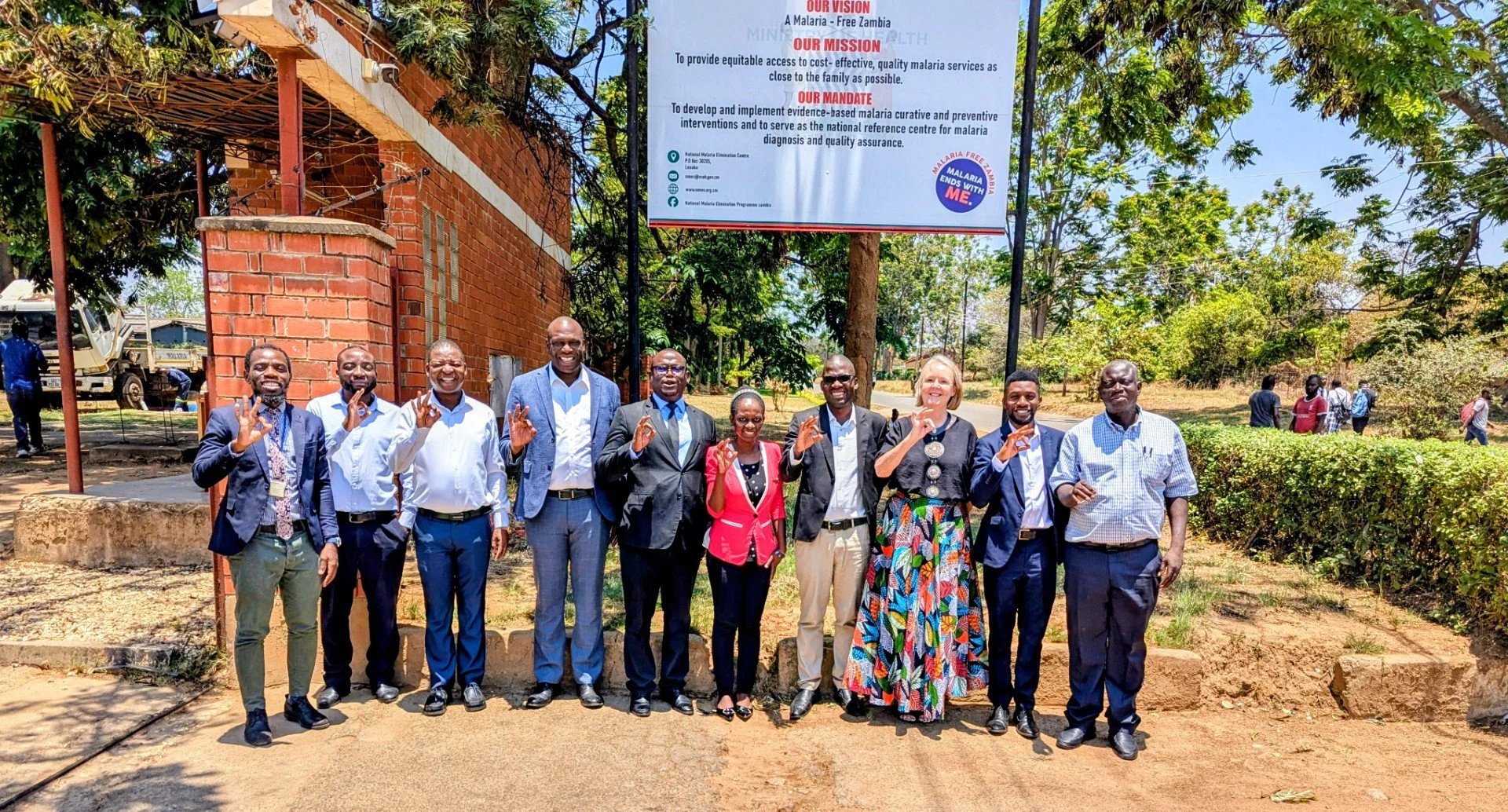
NMEC and MARC SE-Africa teams.
NMEC and MARC SE-Africa representatives agreed to continue technical support discussions, focusing on four key areas:
therapeutic efficacy study analysis
multiple first-line treatments using a rotational approach
cross-border malaria intervention strategies
the costing of Zambia’s AMDR response strategies.
Dr Fanaka concluded by emphasising the Zambian NMEC's willingness to collaborate with MARC SE-Africa. The visit culminated in the tour of the Zambian NMEC facility and infrastructure.
TDR Fellowship bringing research institutions in Africa closer together
Dr Katanekwa Njekwa is currently taking part in the WHO TDR Clinical Research Leadership fellowship programme at UCT and is supervised by Prof Barnes. In this fellowship, Dr Njekwa is part of MARC SE-Africa’s coordination hub at UCT, building skills in clinical research leadership in tackling AMDR. His work involves evidence synthesis on the association of Kelch13 mutations and therapeutic efficacy of artemisinin-based combination therapies in uncomplicated falciparum malaria, using an individual patient data meta-analysis.
During the visit to Zambia, Prof Barnes also visited the Centre for Infectious Disease Research in Zambia (CIDRZ) to better understand the systems and research capacity available for Dr Katanekwa’s re-entry programme and future malaria research. Prof Barnes met with various departments and gave a brief talk to the CIDRZ research team about her background in clinical pharmacology, her passion for optimisation of anti-malarial therapy, and the objectives of MARC-SE Africa. The discussion focused on potential gaps, synergies, and collaborations between the institutions. She further sat down with Michelo Simuyandi (senior research scientist at the basic sciences and immunology unit unit) and Dr. Monde Muyoyeta (Chief Scientific Officer, Director of theTB and other respiratory diseases department) whose discussions highlighted promising areas for future collaboration in malaria and specifically AMDR research.
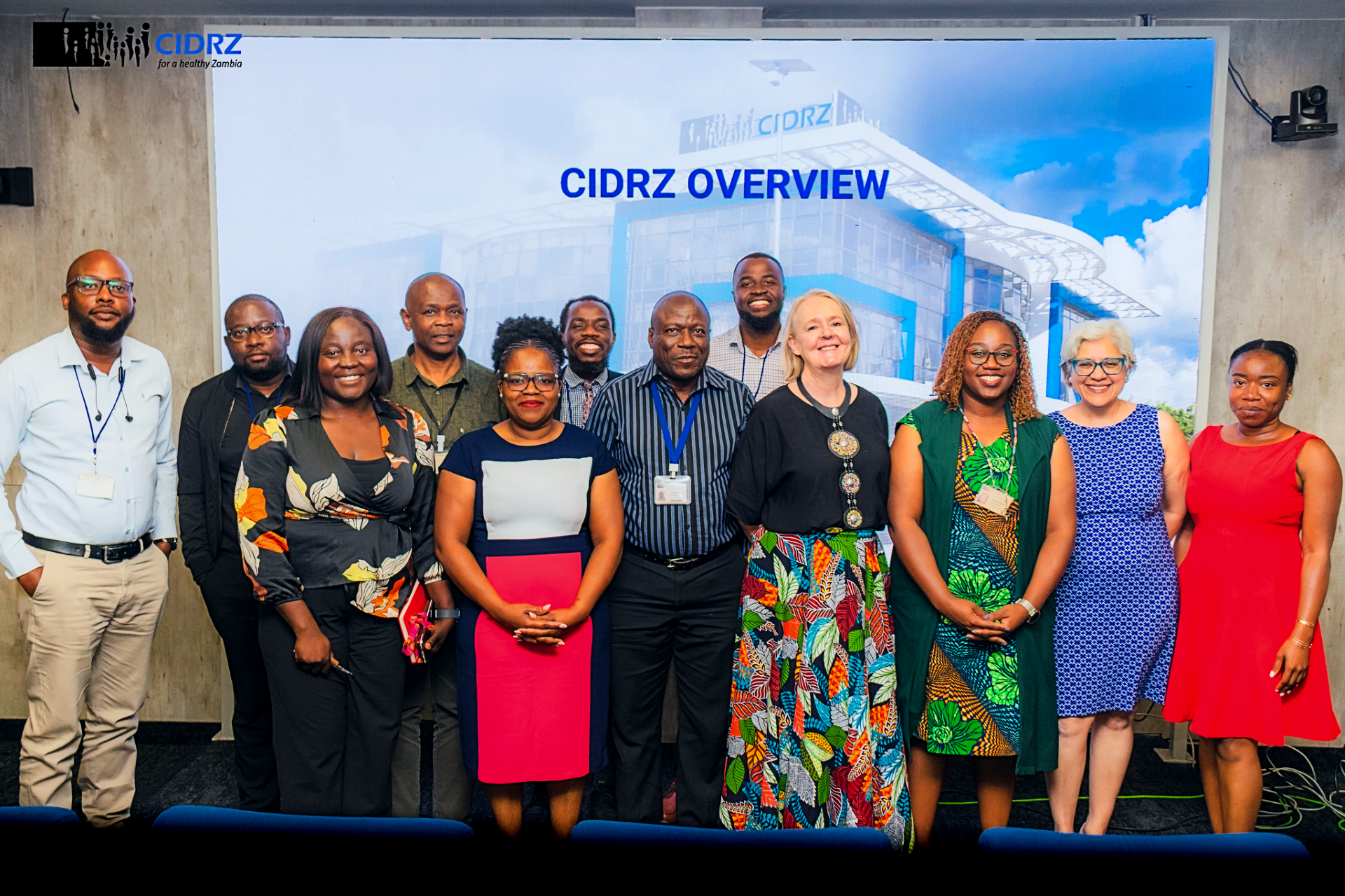
Prof Karen Barnes with the CIDRZ team.